Request thermostat repair & replacement for a property in Listowel. Include the equipment, the problem or planned work, and your location so the request can be reviewed.
How can a thermostat fault be distinguished from a problem in the equipment it controls?
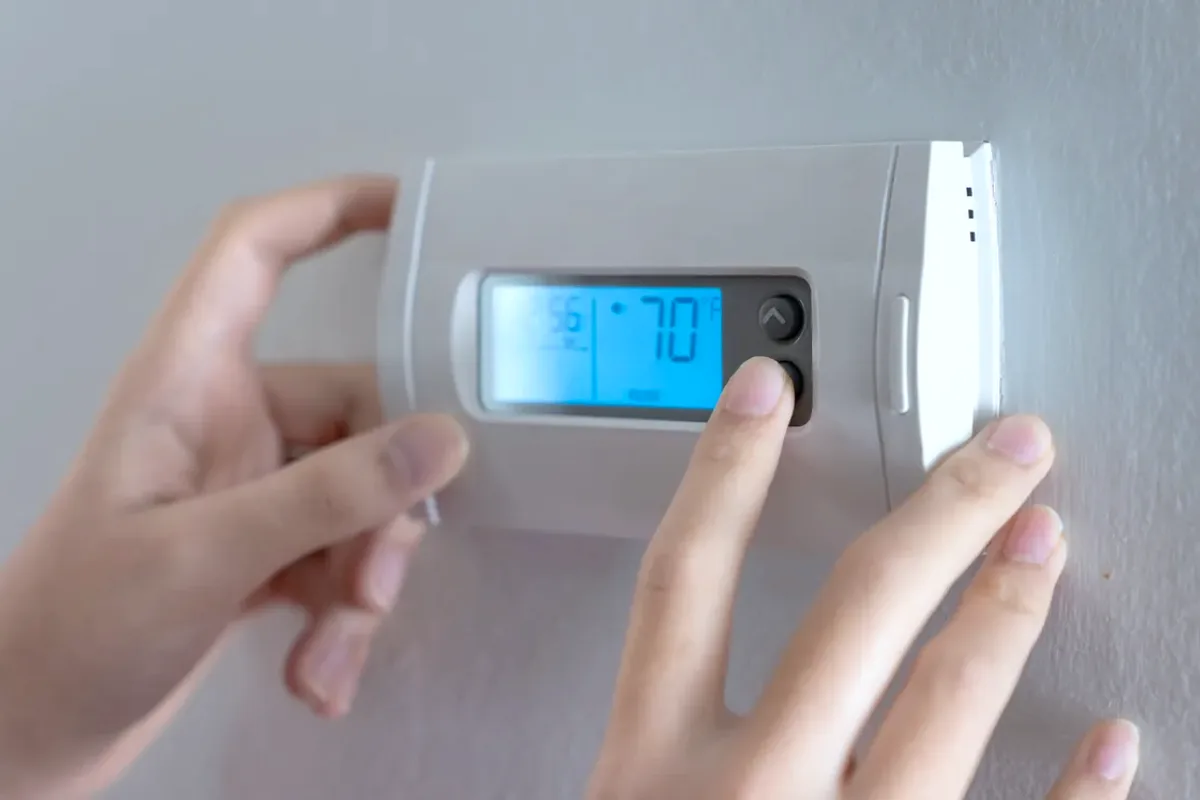
A thermostat that has a blank display, reads inaccurately, or causes short cycling may have a thermostat fault, but the connected HVAC system can produce similar symptoms. Diagnosis should distinguish power, wiring, sensor, and control issues before replacing the device. If a new thermostat is considered, compatibility matters, particularly with two-stage furnaces, heat pumps, or other staged equipment. Programmable and smart features are useful only when they work with the system and settings the household intends to use.
Note the display behavior, temperature reading, system type, and when the equipment starts or stops. A service assessment can compare thermostat power and wiring with the transformer, control board, and HVAC response. For replacement, the existing terminals and equipment staging matter because an incompatible thermostat may not control all available functions correctly.
Display, temperature reading, and short-cycling symptoms
Power, wiring, transformer, and control-board diagnosis
Programmable and smart thermostat compatibility with staged systems
Assessment and Scope
Questions for the Proposed Work
01
Trace power and wiring before replacing the thermostat
A blank display or intermittent operation can result from a power supply, wiring connection, transformer, or thermostat failure. Testing the circuit and checking how the equipment responds helps separate those possibilities. Short cycling can also originate in the furnace or air conditioner rather than the thermostat itself. Identifying the source first avoids replacing a control that is working and keeps attention on the actual system fault.
02
Check compatibility with the HVAC system
Before replacement, identify the equipment type, control wiring, and whether the system uses multiple heating or cooling stages. A heat pump may need different controls from a conventional furnace, and a two-stage system needs a thermostat that supports its configuration. Smart or programmable features should be compared with the wiring and functions available. This review determines whether an upgrade can operate the intended equipment rather than simply fit on the wall.
03
Set functions to match actual use
After repair or replacement, settings should reflect the connected equipment and the household’s preferred schedule. Incorrect mode selection or staging can make a correctly installed thermostat appear unreliable, so operation should be checked across relevant calls for heating or cooling. Remote access, energy monitoring, and scheduling are model-dependent features, not universal capabilities. The product instructions explain available settings and any limits imposed by the HVAC system.
Compare the next step
Plan control wiring and sensor locations alongside the equipment design, then confirm the final wall and room use before closing finishes. Ask who connects and configures the controls after construction. The handover should demonstrate normal heating and cooling operation rather than stop at powering up the display. Agree on who documents the final equipment configuration and which wiring remains accessible. If the renovation changes room use or partitions, confirm that the finished sensor locations still serve the agreed control plan.
Thermostat wiring is not universal. Do not connect wires by colour alone or work on energized wiring; a compatible control must be configured for the equipment it serves.